ACTING TOGETHER FOR TOMORROW

At the Stubai Glacier, we implement measures in the areas of mobility, energy, nature, regional sourcing and waste management. On this page, we provide information about selected measures, their underlying principles and the available key figures.

Travelling Together

We offer our guests various options for travelling to the ski area by public transport. For many years, the ski bus in the Stubai Valley has provided free public transport to our ski area. According to our calculations, the ski bus service avoids around 135,000 car journeys each year.* The free ski bus runs every 15 minutes between Schönberg and the Stubai Glacier valley station. During the winter season, bus route 590 operates from Innsbruck to the Stubai Glacier.
*This figure is based on an internal calculation using visitor numbers and recorded car and bus frequencies from the 2018/19 and 2022/23 winter seasons.

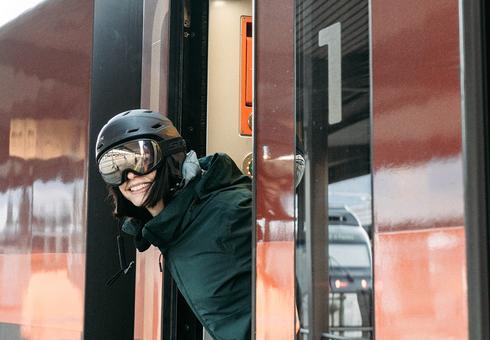
Frau mit Skihelm und Brille steigt aus Zug aus
Travelling by train can significantly reduce CO₂ emissions. In a skiing holiday scenario analysed by the Austrian Environment Agency (Umweltbundesamt), emissions from travelling by train were around 75% lower than those from travelling by car. (Source: Umweltbundesamt, 2018)
E-Tankstellen an der Talstation Stubaier Gletscher, ein Gast lädt sein Elektroauto auf
At our valley station, 10 EV charging stations provide charging facilities for up to 20 electric cars.
Schwarzes Auto im Vordergrund und weiße Autos im Hintergrund an der Talstation Eisgrat
We provide shuttle buses for our employees' journeys to and from work. This combines individual journeys and helps avoid separate car journeys.

100% Electricity from Renewable Energy Sources

According to information provided by our energy supplier, 100% of the electricity used to operate our cable cars and lifts comes from renewable energy sources.

Mitarbeiter in Schaltzentrale der 3S Gondelbahn
By adjusting operating speeds according to demand, energy consumption can be reduced by up to 18% compared with operation at full speed. (3S Eisgrat cable car; Gamsgarten cable car)
3S Eisgrat Gondelbahn
During downhill operation of the 3S cable car, energy is recovered and fed back into our system.

Energy management at 3,000 metres

We use electricity from 100% renewable energy sources to supply our heating and building systems. Indoor temperatures are regulated by a ventilation system with heat recovery. Energy is extracted from the warm exhaust air and used to heat the incoming fresh air. We are gradually converting the lighting in our buildings to LED technology, which can reduce the amount of energy used for lighting.

Rolltreppen und Stiegen in der Bergstation Eisgrat
Ventilation systems with heat recovery in our buildings.
gelbe Glühbirne
Gradual conversion to LED lighting.

Nature and Alpine Habitat

The Stubai Alps include numerous designated protected areas. The Stubai Glacier ski area extends across five glaciers. The use of glaciers in Austria is subject to legal requirements.

Pistenrevisionsarbeiten am Stubaier Gletscher
During the winter months, natural terrain features and wind conditions are used to create snow depots. The snow used for these depots is collected from glacier-free areas and slopes.
Skigebiet Stubaier Gletscher
Reservoirs are supplied by natural snowmelt. The water is used for technical snowmaking and returns to the natural water cycle as the snow melts.
Eisgratbahn im Sommer
We carry out measures to maintain and restore natural areas and ski slopes. These include repairing damage to vegetation, maintaining paths and restoring affected areas – for example, by sowing and mulching with native seed mixtures suited to the local environment.

Less Waste, Easier Sorting

Waste prevention and waste separation have been part of our operational processes for many years. To reduce waste wherever possible, our measures include:

+ Using glass bottles instead of PET bottles in our restaurants.
+ Ordering and receiving products in bulk and larger quantities.
+ Regional procurement from local businesses.

Grafik zur Abfallwirtschaft mit gelbem, grünen und grauen Müllkorb
Waste separation at all collection points throughout the ski area.
Wanderer mit Kraxe, Bergpanorama im Hintergrund
During the summer, we organise joint litter-picking activities at the Stubai Glacier. The area is checked and carelessly discarded litter is collected.

Local Tastes Best

The food served at our restaurants on the Stubai Glacier depends not only on our chefs, but also on our suppliers. Suppliers from the Stubai Valley and other parts of Tyrol provide us with products including fruit, vegetables, meat, grains and eggs.

Handgemachte Pasta Stubaier Gletscher
We do not use convenience food and prepare many dishes and baked goods ourselves. The pasta used in our dishes is also produced on site in our own pasta manufactory.
Regionalität: Produzent und Endverbraucher mit regionalen Produkten
We use selected products from producers and suppliers in the Stubai Valley and other parts of Austria.

Our Employees

Our employees not only ensure that our cable cars and lifts operate smoothly, but also look after the wellbeing of our guests. We also provide a range of benefits for our employees.

Frau mit roter Kappe und schwarzer Jacke fährt einen Pistenbully
Employee Benefits
High-quality staff accommodation, workwear suited to the requirements of each area of work, a free shuttle service to and from work, a free ski pass for leisure use, free meals in our restaurants and a wide range of individual training and professional development opportunities.
Mitarbeiter Stubaier Gletscher auf der Plattform TOP OF TYROL
Jobs at the Stubai Glacier
As an employer, we aim to provide opportunities for young people in the region and offer a wide range of jobs. Whether in administration, hospitality or as an apprentice in cable car engineering, there are many different career opportunities at the Stubai Glacier.

An Economic Driver for the Region

The Stubai Glacier transports around one million guests each year and, as one of the region's major tourism businesses, contributes to tourism in the Stubai Valley.

Skifahren am Stubaier Gletscher im Jahr 1968
We have been providing jobs at the Stubai Glacier since 1973. Today, we employ around 350 people during the winter season across a variety of areas.
3S Eisgratbahn cabins, Eisgrat mountain station, Stubai Glacier ski lift support access
The Stubai Glacier contributes to value creation in the Stubai Valley.

Further Information

Getting to the Stubai Glacier
In addition to travelling by car, there are various public transport options for reaching the Stubai Glacier. These include the free ski bus in the Stubai Valley and the bus connection from Innsbruck.
Find out more about travelling to the Stubai Glacier by public transport.

Sources & Calculation Methods
Ski bus: The figure of around 135,000 avoided car journeys per year is based on an internal calculation by the Stubai Glacier using visitor numbers and recorded car and bus frequencies from the 2018/19 and 2022/23 winter seasons.
Travel by train: Austrian Environment Agency (Umweltbundesamt), “Vergleichende Treibhausgasbilanz typischer Arten von Urlauben”, October 2018, skiing holiday scenario for Austria.
Electricity from renewable energy sources: TIWAG / 66.67% Austria, 33.24% Norway, reference year 2025.
Operating speed / lift systems: Internal technical calculation; energy consumption compared with operation at full speed; 3S Eisgrat cable car and Gamsgarten cable car.
Information correct as of September 2026.